

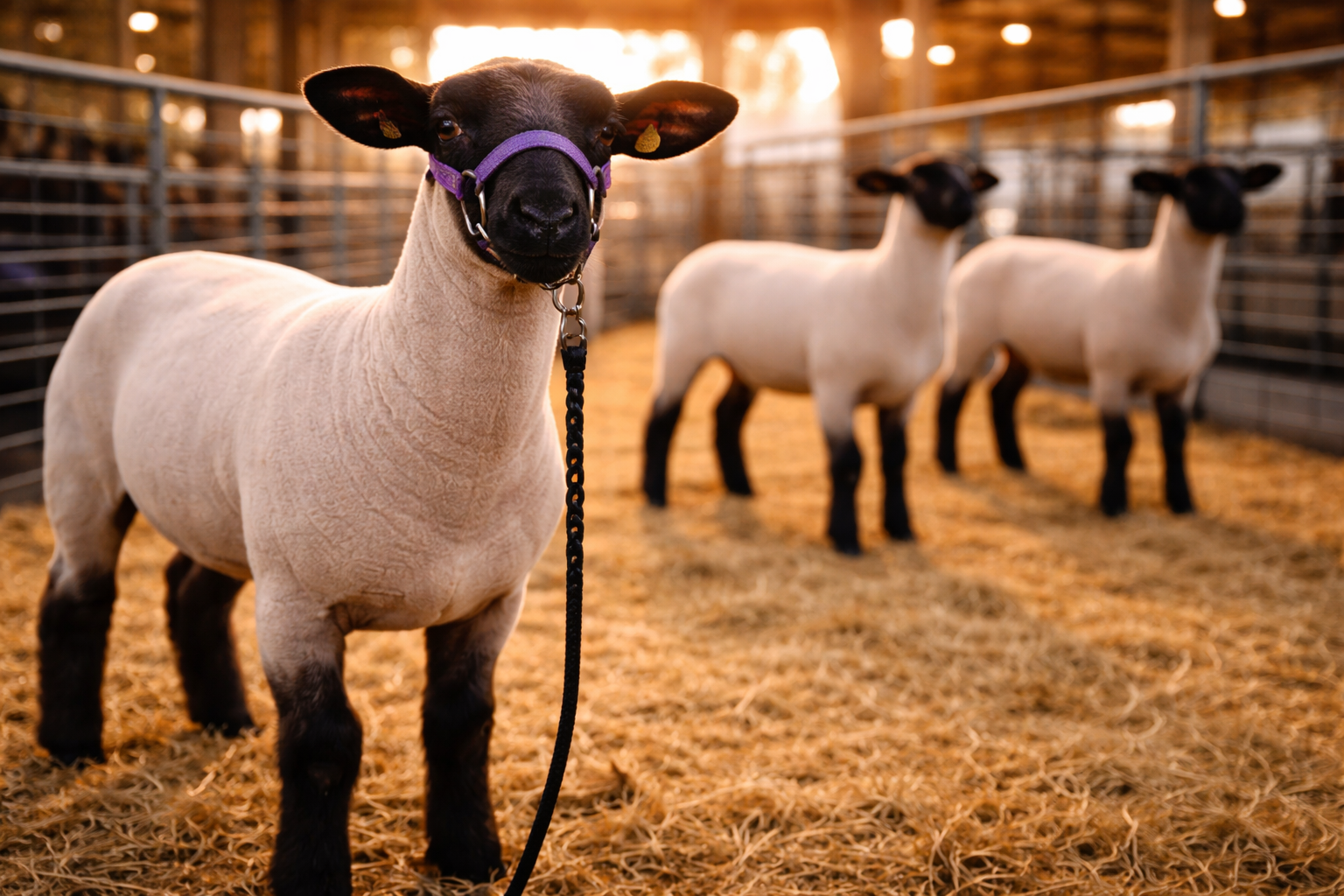
Elite Show Feed
Medicated, Textured Show Lamb Complete Feed Designed to Meet the Needs of All Growth Stages — With Decoquinate for the Prevention of Coccidiosis in Young Sheep
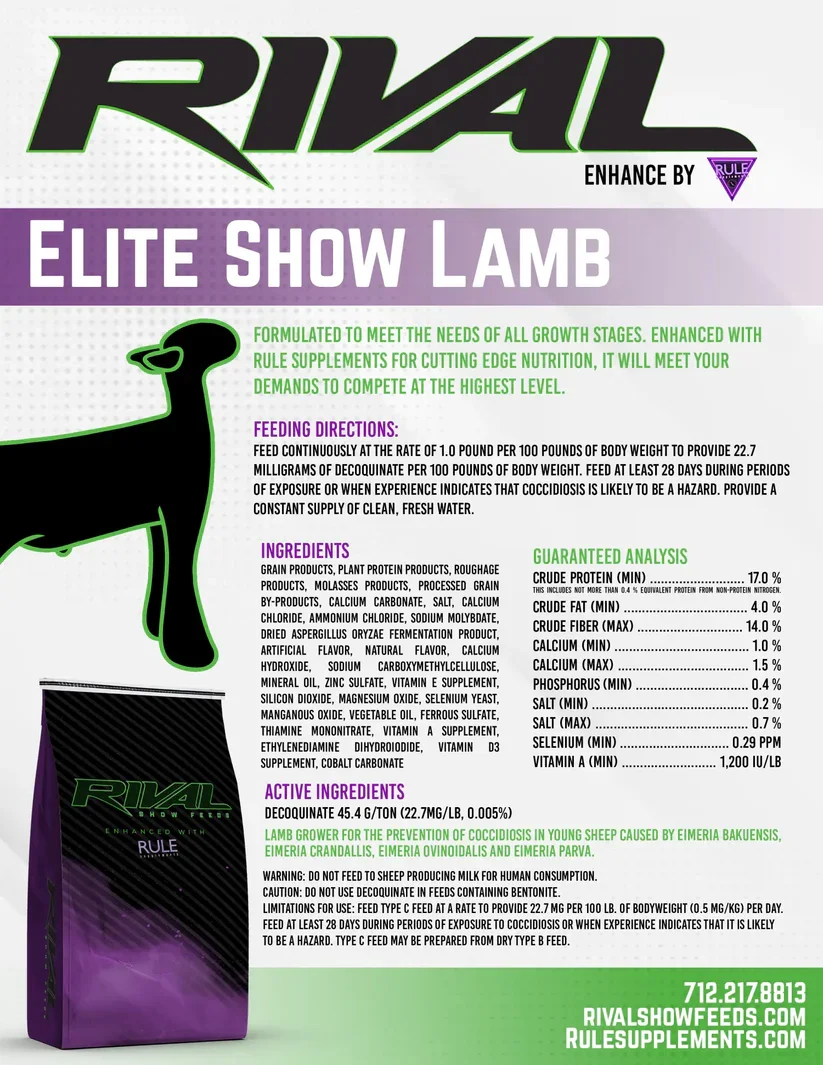
Nutritional Analysis
Protein: 17% Fat: 4% Fiber: 14%
Decoquinate 45.4 g/ton
Rival Elite Show Lamb is positioned as a do-it-right base feed for show lambs—built to cover fundamental needs across growth stages and supported by a medicated claim for coccidiosis prevention in young sheep. The manufacturer quick-reference guide lists it as a textured show sheep feed with 17.1% protein, 3.9% fat, and 9.2% fiber, and notes it is enhanced with Rule Supplements.
From a medicated-feed standpoint, Elite Show Lamb uses decoquinate (Deccox-type coccidiostat). The label-style directions specify continuous feeding at 1.0 lb per 100 lb body weight to deliver the target decoquinate dose, for at least 28 days during risk periods, with constant fresh water available.
This makes it a strong fit for families who want a consistent, textured feed that can be used for daily intake and performance while staying disciplined on coccidiosis prevention when fed as directed.
Key Benefits
Complete feed formulated for show lamb growth stages
Prevention of coccidiosis in young sheep caused by listed Eimeria species
Textured format for palatability and intake management
Choose this product if:
You want a textured show lamb base feed intended to support multiple growth stages
You want a decoquinate-medicated option for coccidiosis prevention in young sheep and will feed it consistently as directed
Rival Elite Show Lamb may not be the best choice if:
You need a non-medicated ration
Your program includes milk-producing sheep for human consumption
You are using feeds/additives containing bentonite (restriction)
Rival Elite Show Lamb is formulated to meet show lamb needs across growth stages and is medicated with decoquinate for the prevention of coccidiosis in young sheep caused by Eimeria ovinoidalis, E. crandallis, E. parva, and E. bakuensis.